The rook/Corvus frugilegus
29.
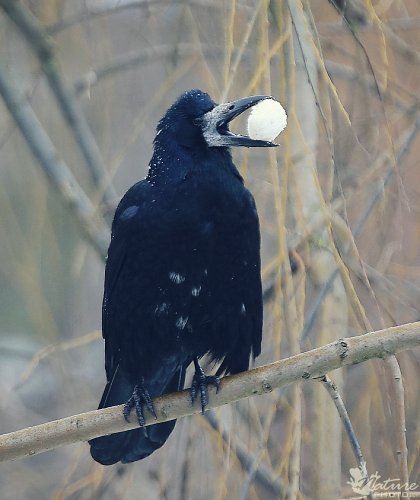
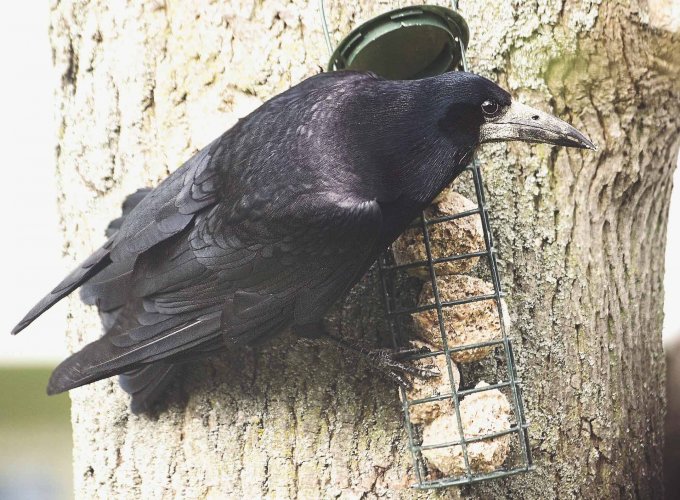
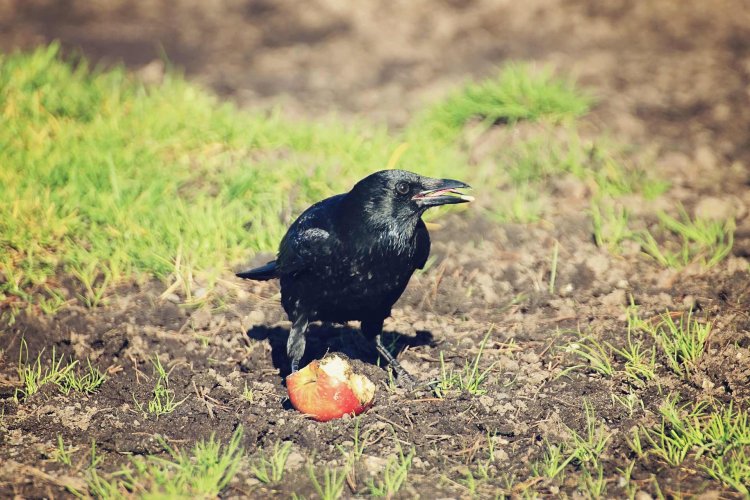
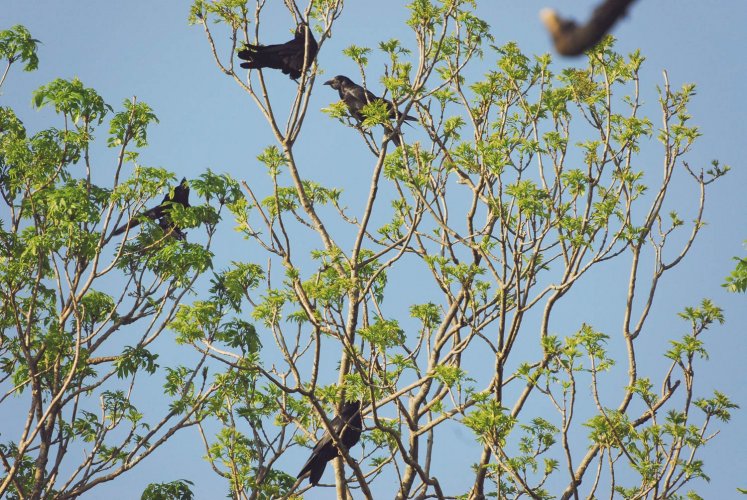
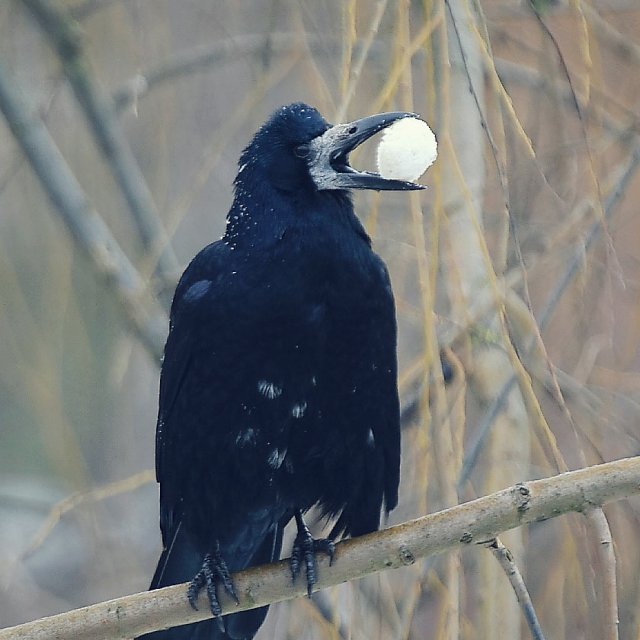
This species is similar in size (45–47 cm. in length) to or slightly smaller than the carrion crow with black feathers often showing a blue or bluish-purple sheen in bright sunlight. The feathers on the head, neck and shoulders are particularly dense and silky. The legs and feet are generally black and the bill grey-black.
Food is predominantly earthworms and insect larvae, which the bird finds by probing the ground with its strong bill. It also eats cultivated cereal grain, smaller amounts of fruit, small mammals, acorns, small birds, their eggs and young and carrion.
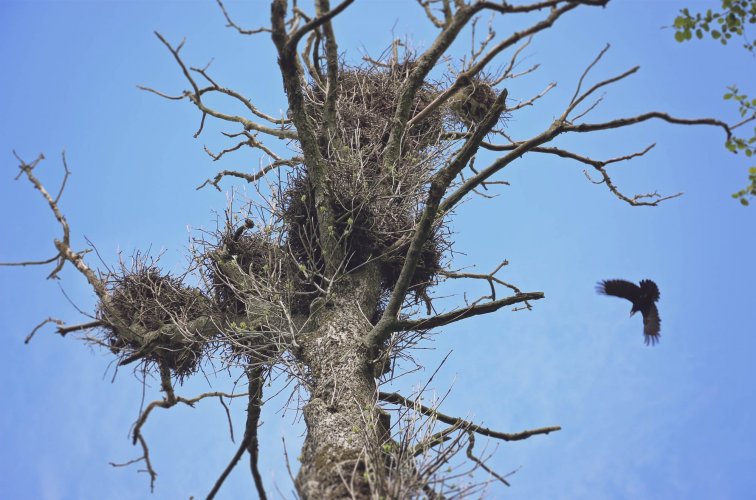
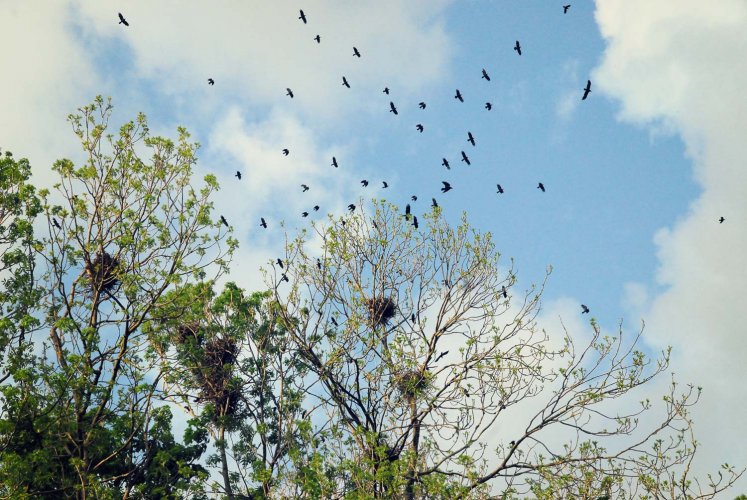
Nesting in a rookery is always colonial, usually in the very tops of the trees. Branches and twigs are broken off trees (very rarely picked up off the ground), though as many are likely to be stolen from nearby nests as are collected from trees.
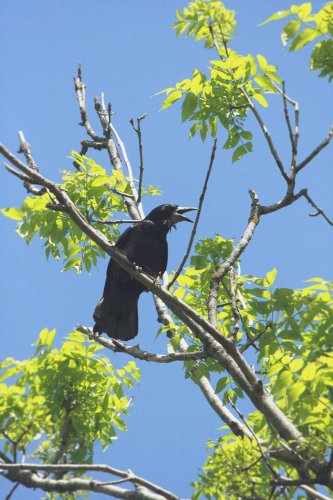
The call is usually described as kaah—it is similar to that of the carrion crow, but usually rather flatter in tone.